
.png)
A single distribution transformer failing at 2 a.m. does not produce one alert. Every smart meter downstream sends a last-gasp notification within seconds. Customer complaints begin arriving. Low-voltage automation devices generate their own events. What is one physical fault on the network quickly becomes hundreds, sometimes thousands, of signals reaching the control room.
Smart meters have given utilities deep visibility into the low-voltage network, but that visibility comes with a new problem. The challenge is no longer detecting outages; it is sorting one fault from the noise.
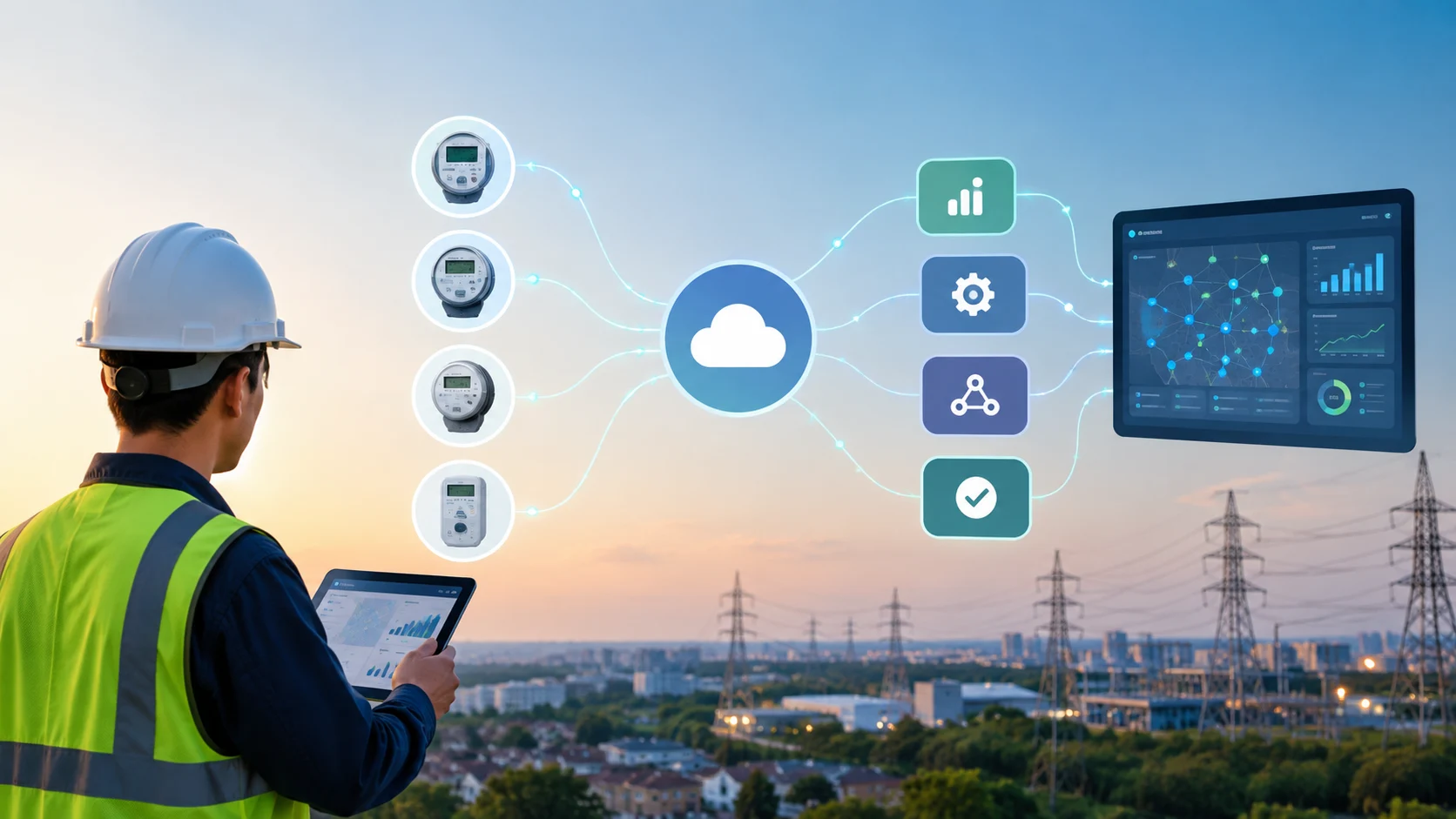
Operators do not need hundreds of signals describing the same transformer failure. They need one clear, actionable incident. This is the role of Low Voltage Outage Aggregation: correlating related outage signals from multiple operational sources into a single incident that operators can act on, so control rooms can focus on restoring power instead of interpreting raw events.
Why does a single outage create hundreds of operational events?
When a distribution transformer fails, every downstream smart meter reports a loss of power. Each meter reports only its own condition, so a single physical outage generates hundreds of independent notifications.
Those notifications are not the only events arriving at the control room. Customer complaints, automation devices, and restoration events all contribute additional information about the same outage. What operators receive is not one outage record, but many separate events describing the same incident from different sources.
Three types of events arrive together.
- Last-gasp notifications. Every downstream meter reports a power loss within seconds of the outage. Individually, the events are correct, but together they represent the same transformer failure.
- Momentary outages. Some interruptions are restored automatically before any field response is required. The outage and restoration events are still generated, even though no crew dispatch is needed.
- Duplicate reports. Customer calls, mobile app reports, and automation devices create additional notifications for an outage that has already been detected.
Taken together, these events make it difficult for operators to determine the underlying fault quickly. Instead of responding to a single outage, they must first determine which events belong together before restoration can begin.
Also Read: Transformer Voltage Monitoring: Stop Failures Before They Start : Grid
How are related outage signals grouped into a single incident?
The events themselves do not identify the transformer that failed. Each meter reports only its own loss of power. The relationship that connects them exists in the network hierarchy: which meters sit under which distribution transformer, which transformers belong to a feeder, and which feeders belong to a substation.

Grouping the signals means correlating the events against that hierarchy and resolving them to the asset they share. When hundreds of meters report a loss and all of them sit downstream of the same distribution transformer, the events are correlated into one incident tied to that transformer rather than treated as hundreds of independent outages.
Duplicate reports for an outage already identified are folded into the same incident, and momentary events that restore themselves are recognized and held back rather than raised for dispatch.
The result is a single outage record for each physical fault: the affected asset, the meters downstream of it, and the related events in one view. Operators work from that incident rather than from the raw event stream.
How does low-voltage outage aggregation work with the systems a utility already runs?
Most utilities already operate an Advanced Distribution Management System (ADMS) or an Outage Management System (OMS) to manage outages and coordinate restoration. Outage aggregation does not replace these systems. It works ahead of them.
The reason is capacity. An ADMS is built to manage the network, not to absorb a meter fleet's worth of simultaneous events. When hundreds of meters report at once, along with complaints and automation events, sending that raw traffic straight into the ADMS spends its capacity on sorting rather than on managing the response. Correlating the events first means the ADMS receives one incident to act on instead of hundreds of separate notifications.
Aggregation also does not sit inside the metering pipeline. It reads the outputs of the systems already in place, from various sources such as the head-end system, the MDM, complaint channels, and automation devices, and works from whatever they provide. It does not depend on where each source sits or how it is configured. The correlation happens alongside these systems, and the resulting incident is passed to the ADMS or OMS, which continues to manage restoration as it always has.
How does a single outage incident change the operator's work?
With one incident per fault, the first thing operators gain is a clear read on the outage. The incident identifies the affected transformer and the meters downstream of it, so the scale and extent of the outage, how many customers are affected and where, are available at once rather than assembled by hand from separate events.
Because momentary events are recognized and held back, crews are not dispatched to interruptions that already restored themselves. Field effort goes to faults that need a response.
The incident also carries the affected-customer picture, so customers and downstream systems can be kept informed of the outage and its restoration without an operator compiling the list manually.
Each incident retains the events that formed it, which gives the utility a clear record of what happened for reporting and later review.
The change for the operator is in where the time goes. Less of it is spent reading raw events and working out which ones belong together, and more of it is spent on the decisions that restore power. The starting point is a defined fault, not an unsorted stream of notifications.
Is your control room ready to act on one incident instead of hundreds of signals?
Smart meters solved the problem of knowing an outage had happened. What they created in its place is a problem of volume: one fault now arrives as hundreds of separate signals, and the work has shifted from detecting outages to making sense of them.
Low-voltage outage aggregation is how that work gets done. By correlating related signals against the network and resolving them into a single incident, it lets a control room start from a defined fault rather than an unsorted stream of events, while the systems already managing restoration carry on as before.
For utilities running large meter fleets, the question is no longer whether the data is there. It is whether it arrives as noise or as one clear incident. If you want to see how outage aggregation would handle your own outage signals, book a live demo.

.webp)
.png)


