Tripura’s smart-meter billing dispute has moved from consumer complaints to government intervention. After weeks of protests, highway blockades and complaints about inflated electricity bills, the state government has ordered officials not to collect payments on bills flagged as abnormally high from May 2026 onwards until individual cases are investigated.
The development is significant for DISCOMs beyond Tripura because the reported cases point to several points in the electricity data chain where an error can become a billing problem: incorrect information entering the system, abnormal consumption or billing patterns going undetected, prepaid-system failures and difficulty separating a genuine revenue issue from a billing or data problem.
What happened in Tripura
- Tripura has frozen collection on bills flagged as abnormally high from May 2026 onwards while individual cases are investigated.
- Consumers reported bills running into lakhs, including one case where a recorded 1,740 kW load was later revised to 8 kW and another where a 2,796 kW load was reported for a household whose actual load was said to be 7 kW.
- Prepaid consumers also faced system failures, with the power minister saying around 1.5 lakh consumers were unable to recharge because of server problems.
- TERC has called for billing disputes to be resolved and grievance redressal strengthened, including mechanisms to distinguish legitimate dues from amounts affected by technical, meter or billing issues.
- The state government has announced 100% subsidy on the additional tariff burden for 2026–27, with excess amounts already paid to be adjusted in subsequent bills; the additional subsidy is reported at ₹117.13 crore, taking the year's total subsidy burden to about ₹194.70 crore.
Critical data needs validation before it reaches billing
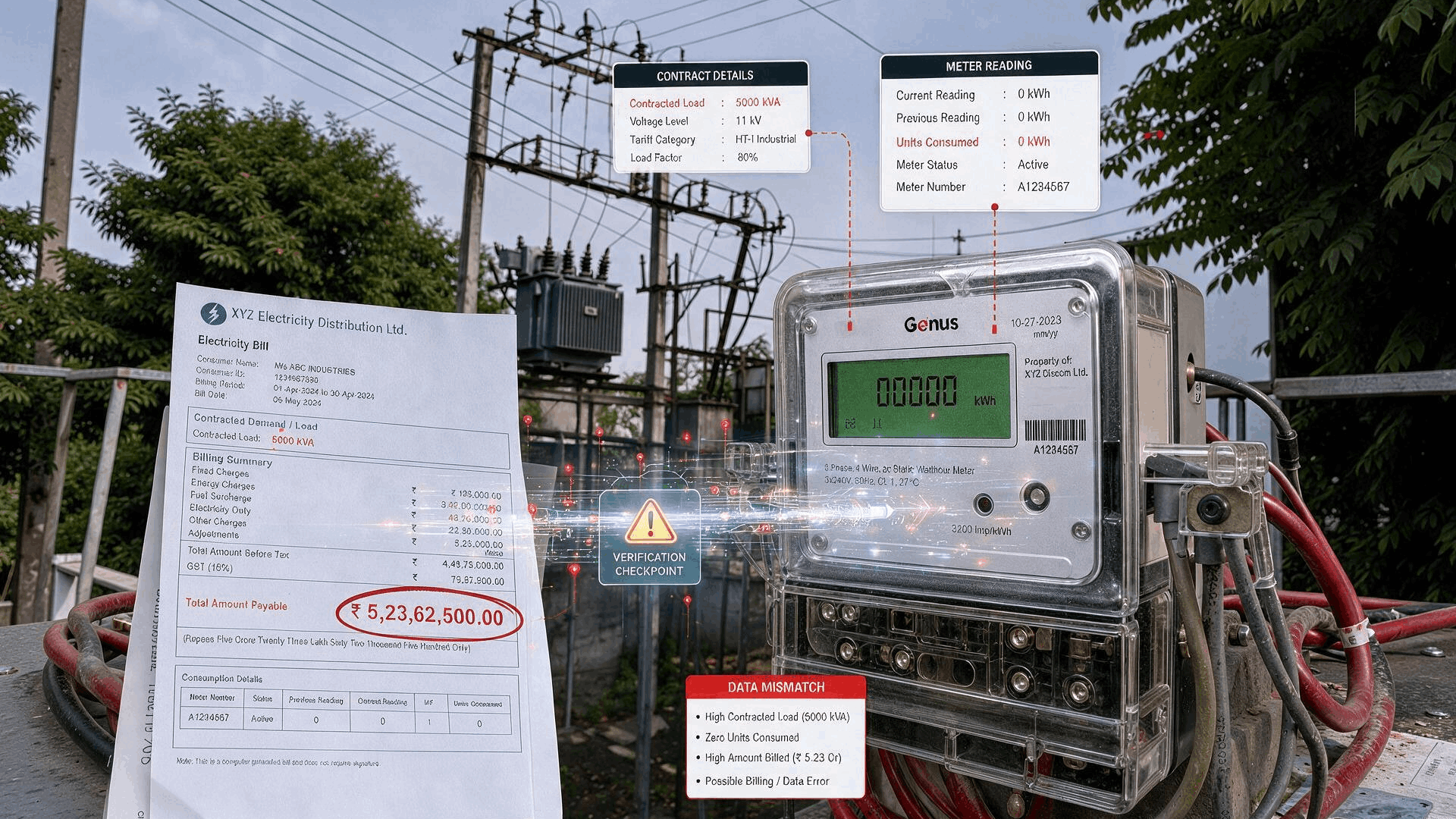
In one case, a commercial consumer received a bill based on a contracted load of 1,740 kW, with the fixed charge alone reaching ₹3.48 lakh. After the consumer complained to TSECL, the load was revised to 8 kW and the bill fell to about ₹16,400.
Another domestic bill showed a contracted load of 2,796 kW and was later adjusted after the consumer challenged it.
The Wire linked several of the reported abnormalities to incorrect contracted-load figures, while TERC's position, as reported, was that fixed charges for domestic and most commercial consumers had shifted to a connected-load basis.
For a DISCOM, that raises a more basic question: how does it know the values feeding the billing engine are right? A contracted-load value sitting incorrectly in a consumer record can have a direct effect on the resulting bill, regardless of how that value entered the system.
This is where a utility needs data-quality controls that can surface inconsistencies before they become consumer-facing billing problems. Grid Vault analyses utility data, identifies data-quality issues and anomalies, and helps DISCOMs flag records that need verification before they move further downstream.
A zero-consumption case should also be visible to the utility
The reported Tripura cases were not limited to incorrect load figures.
The Wire reported a rooftop-solar consumer under PM Surya Ghar whose present and previous meter units showed no difference, indicating zero recorded grid consumption, but who was billed ₹861 anyway. It also reported businesses with near-zero consumption, and closed shops, receiving bills upwards of ₹500, with fixed charges and sundry fees absorbing the payment entirely.
A zero-consumption record is not automatically an error. What makes these cases awkward is that they surfaced when consumers raised them, not before.
That is a question of sequence. Zero consumption is a condition a billing system already knows it has recorded, as are sudden spikes, reverse energy and readings that break from a connection's own history. Whether they are flagged for checking or passed through to the bill depends on how the utility has configured the layer between meter data and the billing run.
Also Read: How Grid is Paving the Way for a Smarter Energy Landscape : Grid
The prepaid failures added their own backlog
The controversy also involved the prepaid system itself.
According to the power minister, around 1.5 lakh prepaid consumers were unable to recharge because of server problems. Dharmanagar experienced a prolonged outage affecting online and counter recharges, while similar failures were reported elsewhere and contributed to protests. TSECL subsequently offered affected consumers the option of paying outstanding recharge amounts in instalments.
That instalment facility is itself a workload. Around 1.5 lakh accounts now carry an arrangement that has to be applied correctly to each bill and closed when complete, running alongside the subsidy adjustment due in September, October and November.
A failed recharge, an abnormal bill and an incorrect field record are different events. They should not be treated as the same problem simply because they eventually surface as consumer complaints.
Wrong bills and unpaid bills sit in the same receivable
TSECL cannot currently tell how much of its unpaid money is owed and how much is disputed.
Tripura Net reports dues unrecovered from nearly half its consumers, and cites cases where a consumer billed around ₹1 lakh paid ₹5,000 to ₹6,000 once adjustments were made. That ₹95,000 was never an arrear. It was an error, and it sat in the books as an unpaid bill until the consumer argued it down.
This is why TERC has told the corporation to separate legitimate outstanding dues from amounts affected by technical, meter or billing issues. Until that separation exists, a recovery drive and a correction exercise look like the same task, and the utility cannot size either one.
The consequence is financial. Tripura Net reports that RDSS is result-linked, with grant eligibility resting on demonstrated improvement in operational and financial performance, and that TSECL needs to improve efficiency, reduce losses and strengthen revenue collection. An unpaid wrong bill and an unpaid genuine bill look identical in the collection figures.
Tripura has also announced financial relief
The billing dispute has unfolded alongside a separate decision by the Tripura government to absorb the entire additional tariff burden approved for 2026–27.
On August 21, the government announced a 100% subsidy on the additional tariff increase. Consumers who have already paid the higher amount are to receive the excess through adjustments in their September, October and November bills. The government said the measure would benefit more than 10 lakh consumer families.
The government said the additional subsidy would amount to ₹117.13 crore, taking the total subsidy burden for the year to about ₹194.70 crore.
The subsidy addresses the additional tariff burden on consumers. The underlying operational lesson from the billing dispute remains separate: a DISCOM needs the ability to identify bad or unusual data, understand what it represents and resolve the resulting exception.
What this means for DISCOMs
The lesson from Tripura is not that smart meters themselves create billing errors. The reports point to several different issues, including incorrect load information, zero-consumption cases, prepaid charging concerns and problems with communication and grievance resolution.
For DISCOMs, the more useful lesson is that each stage of smart meter operation needs appropriate control.
- At the source, field systems should capture installation, inspection and asset information accurately, with location and supporting evidence.
- Before billing, the data layer should be able to identify exceptions such as zero consumption, abnormal spikes and other outliers.
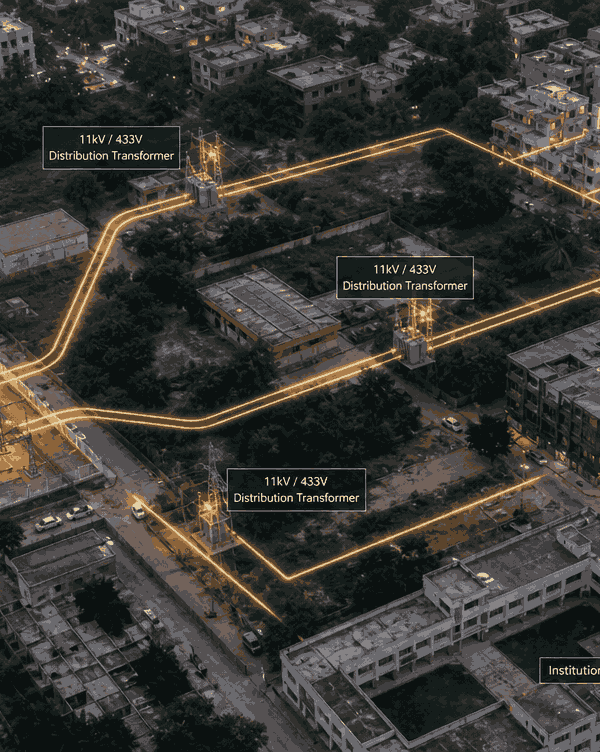
- At the network level, energy accounting should help utilities distinguish genuine losses from consumer-level billing or data issues.
- After detection, workflows should move the issue to the appropriate team, whether the next step is a field inspection, verification or billing follow-up.
The result is not simply another dashboard for a DISCOM. It is an operational layer connecting what happens in the field, what the meters report, what the billing system receives and what the utility does when those pieces do not match.