The International Energy Agency (IEA) says distribution utilities are collecting more grid data, but many still struggle to use it in regular operations. Information often sits across separate systems, while operators need a clearer view of changing network conditions to decide where action is needed.
Its new report, Modernising Grids in the Age of Electricity, finds that this is a wider industry problem. 64% of surveyed network operators cited skills and organisational readiness as a major barrier to digitalisation, while 60% pointed to data availability and quality.
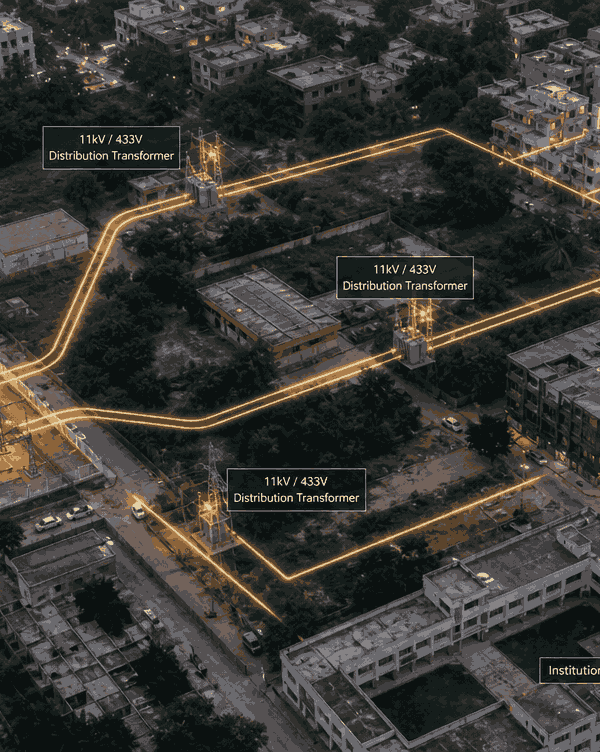
The IEA says better data and network visibility are most urgently needed at the distribution level. For DISCOMs, the question is how to get more operational value from the data, systems and network capacity already in place while the grid continues to expand and become more complex.
Grid digitalisation is running into a skills shortage
The IEA says utilities need people who understand both power systems and digital technologies, but those combined skills remain scarce. At the same time, the grid workforce is ageing: the number of workers aged 55 and over increased by nearly 50% between 2015 and 2024, compared with a 20% increase among workers under 55.
That makes it harder for utilities to move digital tools from individual projects into regular operations. For utilities, that can also mean making routine work easier to execute: clearer job assignments, standardised workflows, mobile access to field instructions and approvals, and fewer handoffs between separate systems. These changes do not solve the skills shortage, but they can reduce the operational burden on the teams already in place.
AI adoption is growing, but utilities are still struggling to use the data they collect
AI adoption is progressing unevenly. In India, private utilities such as Tata Power and Adani are already using AI in operations, while many state distribution companies face tighter financial and capability constraints.
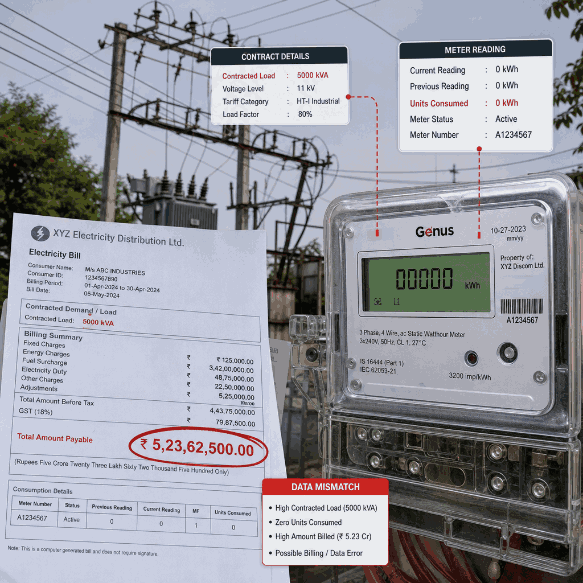
The same gap shows up in how smart-meter data is used. India’s rollout is expanding under the Revamped Distribution Sector Scheme (RDSS), but even more advanced utilities use less than a quarter of the data available to them. The IEA attributes this mainly to a shortage of dedicated analytics teams and institutional capacity, and notes that similar underuse has also been reported in advanced economies.
For utilities, this makes the practical challenge less about collecting more data and more about making existing data easier for teams to work with. Grid AI can support that by letting operators query utility data in plain language, receive explainable answers and work across systems such as Head-End System/Meter Data Management (HES/MDM), Supervisory Control and Data Acquisition (SCADA), Geographic Information System (GIS), billing and Workforce Management (WFM) without manually analysing each dataset separately.
More generation and storage are waiting for grid connections
Grid expansion is struggling to keep pace with new generation and storage. In 2025, at least 1,700 GW of advanced-stage renewable projects and 600 GW of utility-scale batteries were waiting for grid connections globally. The pressure is already carrying a cost: grid congestion reached USD 12 billion in the United States and EUR 4.3 billion in the European Union in 2024.
The IEA says building more infrastructure remains essential, but operators also need to use existing networks more efficiently. It estimates that grid-enhancing technologies could allow up to 330 GW of additional generation, storage and demand to connect to existing networks, avoiding around USD 100 billion in equivalent network expansion.
At the distribution level, growing rooftop solar, EVs and other distributed resources are adding to the need for better visibility over how available network capacity is being used.
Regulation can favour new infrastructure over digital alternatives
Regulatory frameworks were cited as a major barrier by 56% of the network operators surveyed by the IEA. The agency says utilities often have a clearer route to recover investment in new physical infrastructure than in digital or operational solutions that could address the same network problem.
The IEA recommends funding rules that do not favour capital spending on new equipment, along with incentives tied to outcomes such as capacity unlocked and congestion avoided. It also points to regulatory sandboxes as a way for utilities to test new approaches before wider deployment.
Emerging markets will carry most grid expansion to 2035
Global grid capacity will need to increase by at least 30% by 2035, and the IEA expects three-quarters of that increase to take place in emerging market and developing economies. These countries will therefore carry much of the next phase of grid expansion.
At the same time, deployment of many grid-enhancing technologies remains concentrated in Europe and North America. The IEA says emerging-market utilities will need access to proven regulatory approaches, technical resources and financing so they can build better visibility and control into their networks as they expand and replace existing assets.
What DISCOMs should take from the IEA findings
For DISCOMs, the IEA findings point to a practical priority: make better use of the systems, data and digital infrastructure already in place.
WorkOnGrid connects operational data across utility systems, while Grid AI helps teams query and understand that information and move identified issues into the workflows responsible for acting on them. The goal is to turn more of the utility's existing data into decisions that operators can use. Talk to our experts about how we can help your teams get more operational value from the systems and data you already have.