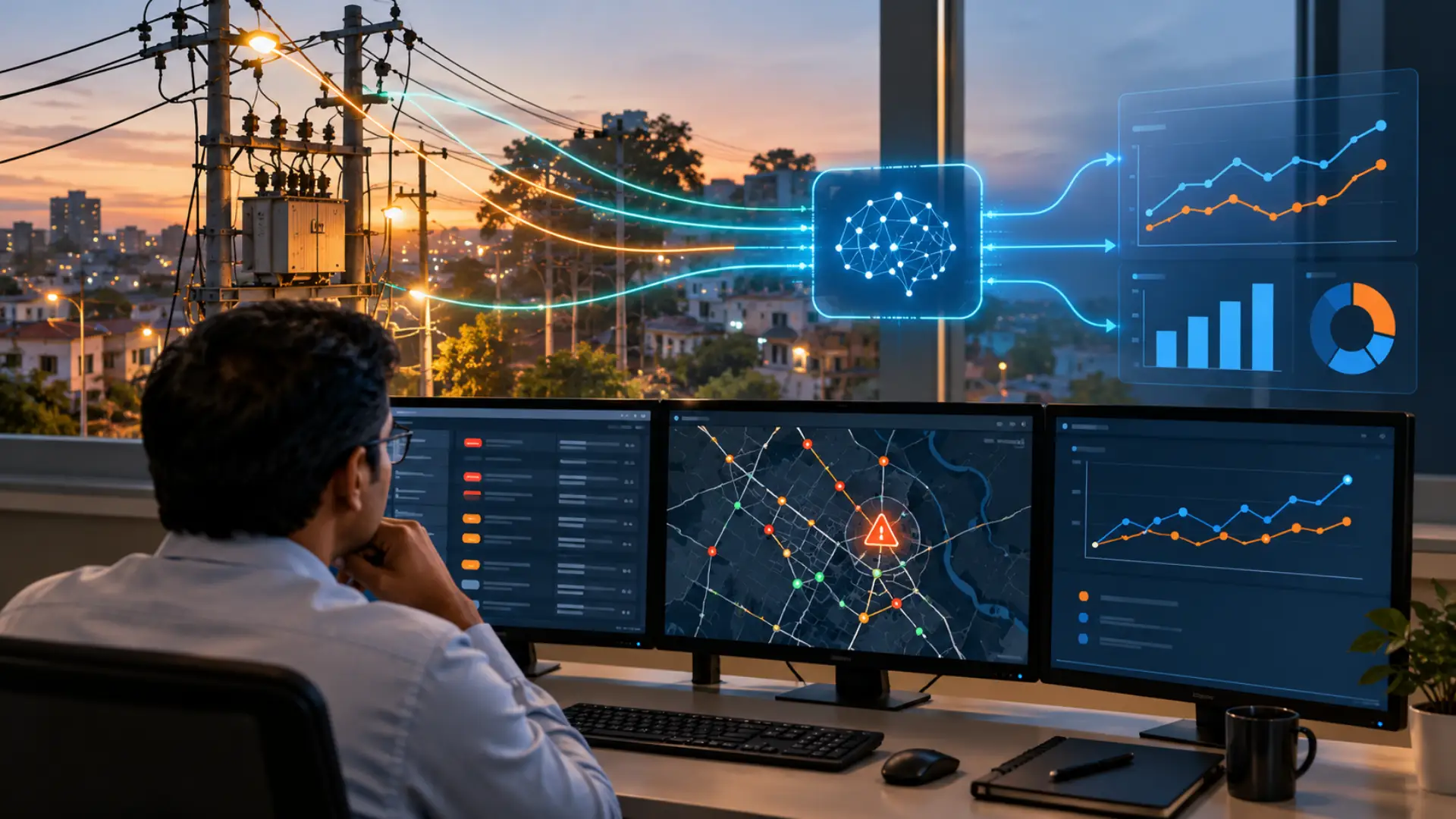
A DISCOM can have millions of meter readings, asset records and field updates at its disposal. Yet when consumption drops unexpectedly or a transformer shows signs of stress, how quickly can its operations team identify the issue?
As of August 2026, India had installed 7.24 crore smart meters across various schemes, according to the Ministry of Power. With growing volumes of data, manually extracting records, comparing spreadsheets and preparing reports becomes increasingly difficult to sustain. Important anomalies can go unnoticed until the next reporting cycle, billing discrepancy or consumer complaint.
For DISCOMs, it is time to rethink how operational data is analysed. Intelligent automation in energy and utilities brings together data integration, automated analysis, AI and operational workflows to identify unusual patterns, flag exceptions and support timely investigations.
But where does automation make the biggest difference compared with manual tracking, and which decisions still require human judgement?
What Does Manual Data Analysis Look Like in a DISCOM?
Manual data analysis often begins with a specific operational question.
- Why has a consumer's electricity consumption dropped unexpectedly?
- Which meters have repeatedly stopped communicating?
- Why are energy losses increasing in a particular transformer area?
Answering these questions requires teams to examine information from several systems, compare records and determine whether an unusual reading indicates a genuine problem. Consider an operations team investigating an unexpected drop in electricity consumption among commercial consumers. An analyst may need to:
- Extract consumption data: Retrieve current and historical meter readings from the Meter Data Management (MDM) system and compare consumption across equivalent periods.
- Check meter events: Review Head-End System (HES) records for communication failures, missing readings or meter events that could explain the change.
- Cross-check consumer records: Examine billing information, customer details and meter replacement history to determine whether the reported consumption is consistent with other records.
- Review field information: Check previous inspection findings, service requests or disconnection records before deciding whether another investigation is necessary.
The analyst must also ensure that meter identifiers, timestamps and consumer records match across these datasets. An apparent consumption anomaly could result from reduced electricity usage, missing readings, incorrect records or a metering issue. A drop in consumption alone cannot establish its cause.
Importantly, manual tracking does not mean every underlying process is manual. Modern HES and MDM systems already automate meter data collection, validation and certain exception checks. The manual effort often lies in bringing information from different systems together, examining related conditions and determining which findings warrant further investigation.
When this work depends on spreadsheet exports, filters and individually prepared reports, the scope and frequency of analysis depend on the team's available time. Analysts may investigate known discrepancies thoroughly while other patterns remain unidentified until someone runs another comparison.
For a DISCOM leader, three questions reveal the operational impact: How long does it take to identify a potentially significant anomaly? How many records are reviewed during each analysis cycle? And how many unresolved exceptions remain awaiting investigation?
How Does Automated Data Analysis Identify Issues in Utility Operations?
When operational data is analysed automatically, teams can identify unusual patterns and exceptions without manually reviewing every record. Intelligent automation combines data analysis, AI and repeatable processes to examine operational information at defined intervals or when relevant events occur.
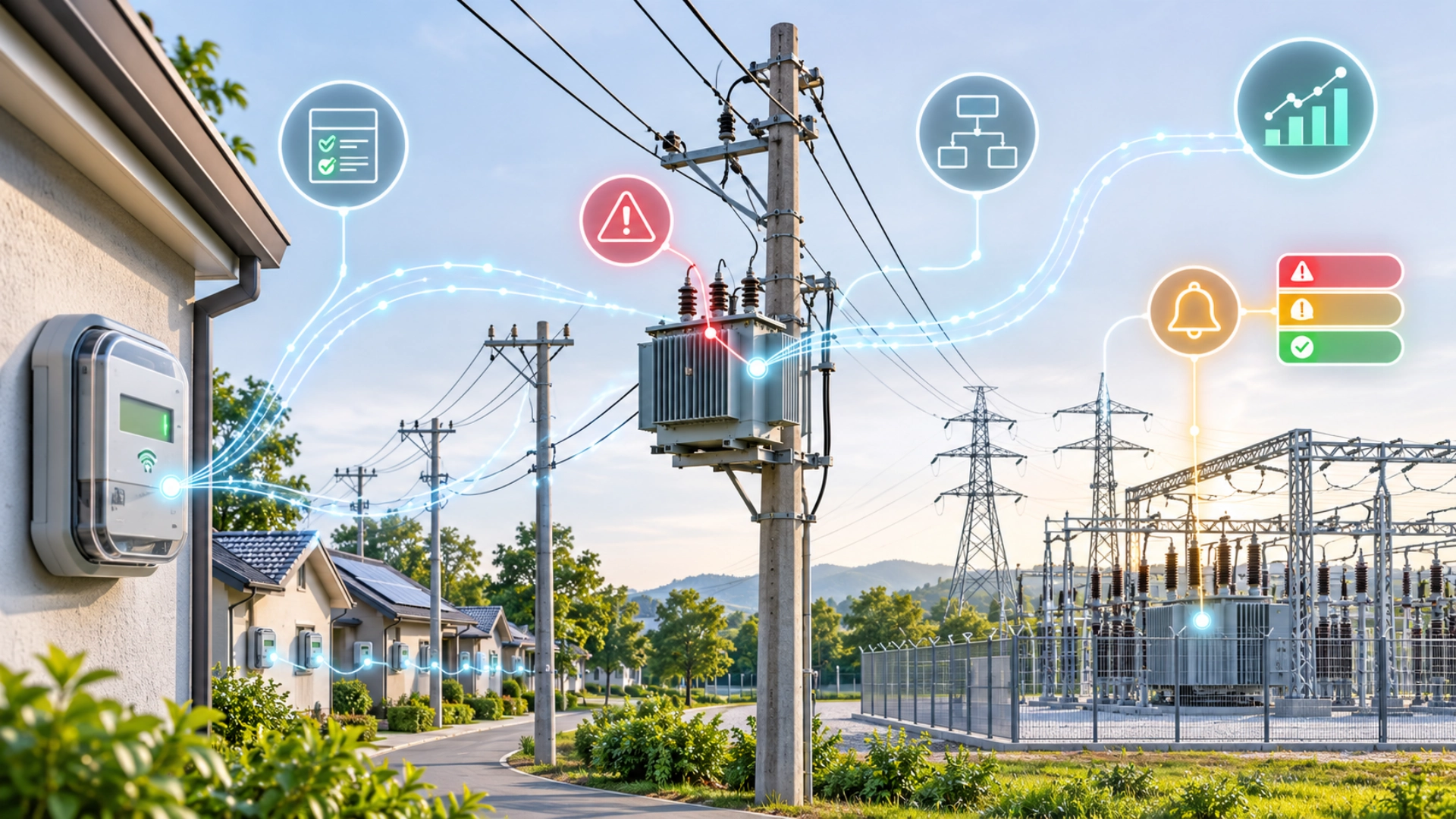
But how does the system determine which records require attention? Automated analysis typically involves 4 steps:
- Bring relevant data together: Consumption readings, meter events, billing information and asset records are made available for analysis. Matching meter, consumer and asset identifiers allows the system to examine related information across different sources.
- Detect patterns and anomalies: Configured thresholds, historical comparisons and AI models identify deviations from expected behaviour. For example, a commercial consumer's consumption dropping significantly below its usual pattern could be flagged for further examination.
- Assess the findings: The system checks related records and operational conditions to determine whether an anomaly has a plausible explanation or requires investigation. This helps distinguish potential operational issues from incomplete data and other explainable variations.
- Prioritise exceptions: Findings are ranked according to criteria such as severity, potential impact and supporting evidence. Teams receive a focused list of cases to investigate, along with the information behind each finding.
A practical example comes from a WorkOnGrid customer managing approximately 700,000 smart meters across two MDM systems. Using AI-driven analysis, the customer scored suspicious meters using 5 independent checks and ranked them for investigation. More than 14,000 meters were marked for action within 24 hours, giving teams prioritised leads rather than requiring them to search through individual records.
These analytical checks can run on configured schedules or respond to relevant events as new data becomes available. This helps DISCOMs identify emerging exceptions between manual review cycles.
How Does Intelligent Automation Turn Insights into Operational Investigations?
For DISCOMs, automatically detecting an anomaly is useful when the finding reaches the responsible team with the information needed to investigate it.
Intelligent automation connects analytical findings with operational workflows. Each flagged case can include the affected meter or asset, the reason it was identified and relevant supporting records. Configured workflows can then assign the case to the responsible team and track its progress.
Consider a commercial consumer whose electricity consumption has dropped unexpectedly. The system could flag the deviation and attach historical consumption comparisons, relevant meter events and available billing information. Based on the type of exception, the case can be routed to the metering or revenue protection team for investigation.
The assigned team can review the evidence, verify the cause and record its findings. This preserves the context behind each exception and makes investigation outcomes traceable, without requiring analysts to assemble the same information manually.
Which Utility Data Analysis Tasks Should DISCOMs Automate First?
Not every analytical task requires the same level of automation. For DISCOMs, the starting point should be recurring activities where manual reviews consume significant effort, delayed findings have operational consequences, and reliable data is available.
Here are some areas that can help leaders prioritise:
- Frequency and volume: Identify analytical tasks repeated daily, weekly or monthly across large datasets. Activities requiring frequent checks across thousands of meters or assets may offer stronger starting points for automation than occasional investigations.
- Operational impact: Assess the consequences of identifying an issue late. Delayed detection of metering discrepancies can affect revenue, while overlooked transformer stress may increase equipment failure risks.
- Data readiness: Check whether the required records are complete, sufficiently current and correctly linked. Automated transformer analysis, for instance, depends on reliable meter-to-transformer mapping. Poor mappings can produce misleading findings even when the analytical model performs correctly.
- Clear follow-up responsibility: Before automating an analytical task, establish which team will investigate the findings and what evidence they need. Prioritise use cases with defined investigation procedures so that flagged exceptions can move into operational action.
For example, a DISCOM may prioritise automating recurring meter communication exception checks when reliable HES records are available. Transformer health analysis may offer greater operational value, but inaccurate consumer-to-transformer mapping could affect the reliability of its findings. The starting point should reflect both operational impact and data readiness.
Where Does Automated Data Analysis Still Require Human Review?
Automated analysis can identify and prioritise operational issues, but acting on those findings requires different levels of oversight. A flagged anomaly may justify further investigation, while actions affecting consumer bills, network operations or field resources require stronger checks.
The important decision is which activities can proceed automatically and which require approval from an authorised team member.
A practical approach is to establish three levels of oversight:
- Routine checks that can be automated: Repeating data validation, retrying failed reads where supported and generating exception notifications can follow predefined rules without requiring approval for every occurrence.
- Findings requiring investigation: An unusual consumption pattern or suspected meter malfunction may need an analyst to examine supporting evidence before confirming the cause. Automation can prepare the relevant records, while the responsible team determines the appropriate response.
- Actions requiring authorisation: Billing adjustments, disconnections and other consequential decisions should follow defined approval procedures. The system can prepare recommendations and supporting evidence, but execution must respect the DISCOM's operational policies and access controls.
The objective is to reserve human attention for decisions that require judgement, verification or accountability, while allowing routine analytical work to proceed automatically.
Here is an article by our founder on The Agentic DISCOM: AI Agents and Human Judgment in Utility Operations, explaining how AI agents can prepare evidence and recommendations while utility professionals retain judgement over consequential decisions.
How WorkonGrid Helps DISCOMS Automate Data Analysis
For DISCOMs managing multiple HES, MDM, billing and field systems, identifying operational issues often requires analysts to reconcile disconnected records before they can begin an investigation.
WorkOnGrid brings these operational datasets together and uses AI-driven analysis to identify consumption anomalies, asset risks and exceptions requiring attention. Its Workflows and Automation capabilities support assigning findings to responsible teams, tracking investigations and recording outcomes.
This helps DISCOMs move from repeated manual data reviews to prioritised investigations, with supporting evidence available to the teams responsible for taking action.
Still spending hours reconciling utility data to identify operational issues? Talk to our team about how WorkOnGrid can help automate analysis and streamline investigations.