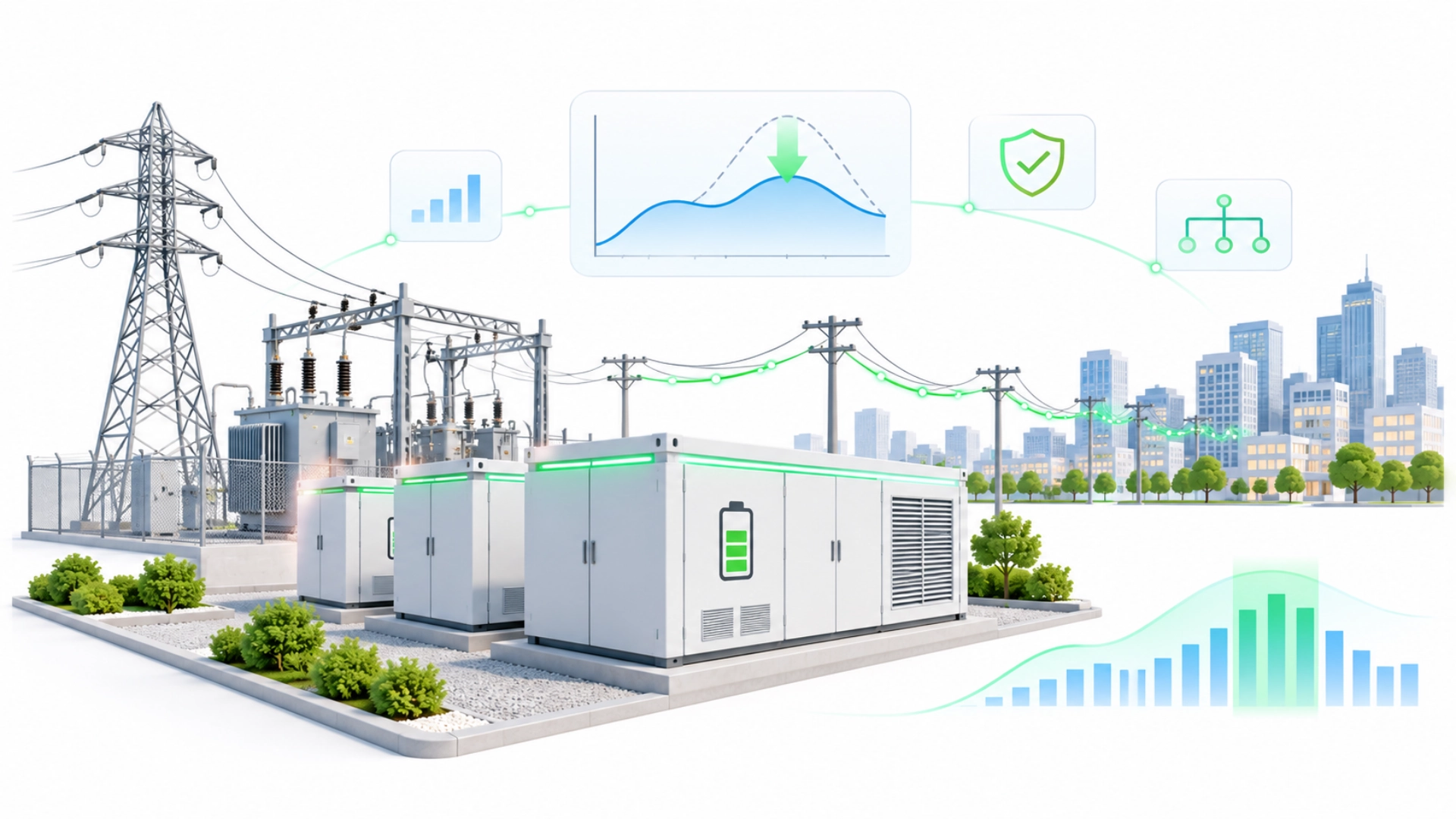
Tata Power has deployed 60 megawatt-hours (MWh) of operational battery energy storage systems (BESS) across Mahalaxmi, Saki and Mankhurd in Mumbai to support peak demand management, power purchase cost optimisation and grid reliability.
Announced on November 6, 2026, the installations are part of the company's efforts to strengthen its electricity distribution network, which serves more than eight lakh consumers.
For DISCOM leaders considering similar deployments, a practical question is how to assess demand patterns and network conditions to support storage-related decisions. WorkOnGrid's data integration and analytics capabilities can support these assessments by bringing together metering and operational data.
Key Takeaways
- Tata Power has operationalised 60 MWh of battery storage across 3 locations in Mumbai.
- The systems charge during lower-cost solar hours and discharge during evening peaks, operating at approximately 1–1.5 cycles per day.
- The deployment forms part of a larger 200 MWh battery storage initiative covering 10 locations in Mumbai.
How Tata Power Is Using BESS to Manage Peak Demand
According to Tata Power's announcement, the batteries store electricity during lower-cost solar hours and discharge it when demand increases in the evening.
Tata Power says this helps optimise power purchase costs and reduces dependence on expensive peak-hour electricity.
The systems have fast-response and high ramp-rate capabilities to support dynamic load management. Operating at approximately 1–1.5 cycles per day, they can respond to demand fluctuations across the distribution network.
The decentralised installations also include black-start functionality to support grid restoration during power system disturbances.
Deployment Forms Part of a Larger 200 MWh Storage Plan
The operational 60 MWh capacity is part of Tata Power's broader battery storage programme for Mumbai.
In April 2025, the company received approval from the Maharashtra Electricity Regulatory Commission (MERC) for a BESS deployment across 10 strategic locations. Tata Power's latest announcement identifies the broader programme as 200 MWh.
The larger initiative aims to strengthen grid stability, improve peak demand and reactive power management, and support faster restoration of electricity supply to critical infrastructure, including hospitals, Metro services, airports and data centres.
How WorkOnGrid Supports Data-Led Distribution Planning
Tata Power's deployment shows how battery storage can help manage electricity demand at different times of the day. For DISCOMs evaluating similar applications, understanding when demand rises, how consumption changes and which parts of the distribution network experience higher loading is relevant to operational planning.
WorkOnGrid's Integration Layer can bring together smart meter readings from HES or MDM with network and operational data from other connected systems, including SCADA. Its analytics and reporting capabilities allow utility teams to analyse consumption patterns, compare feeder loading across reporting periods and review available network data.
Considering battery storage as part of your distribution network plans? Talk to our team to understand how WorkOnGrid can support demand analysis, utility data integration and operational reporting.