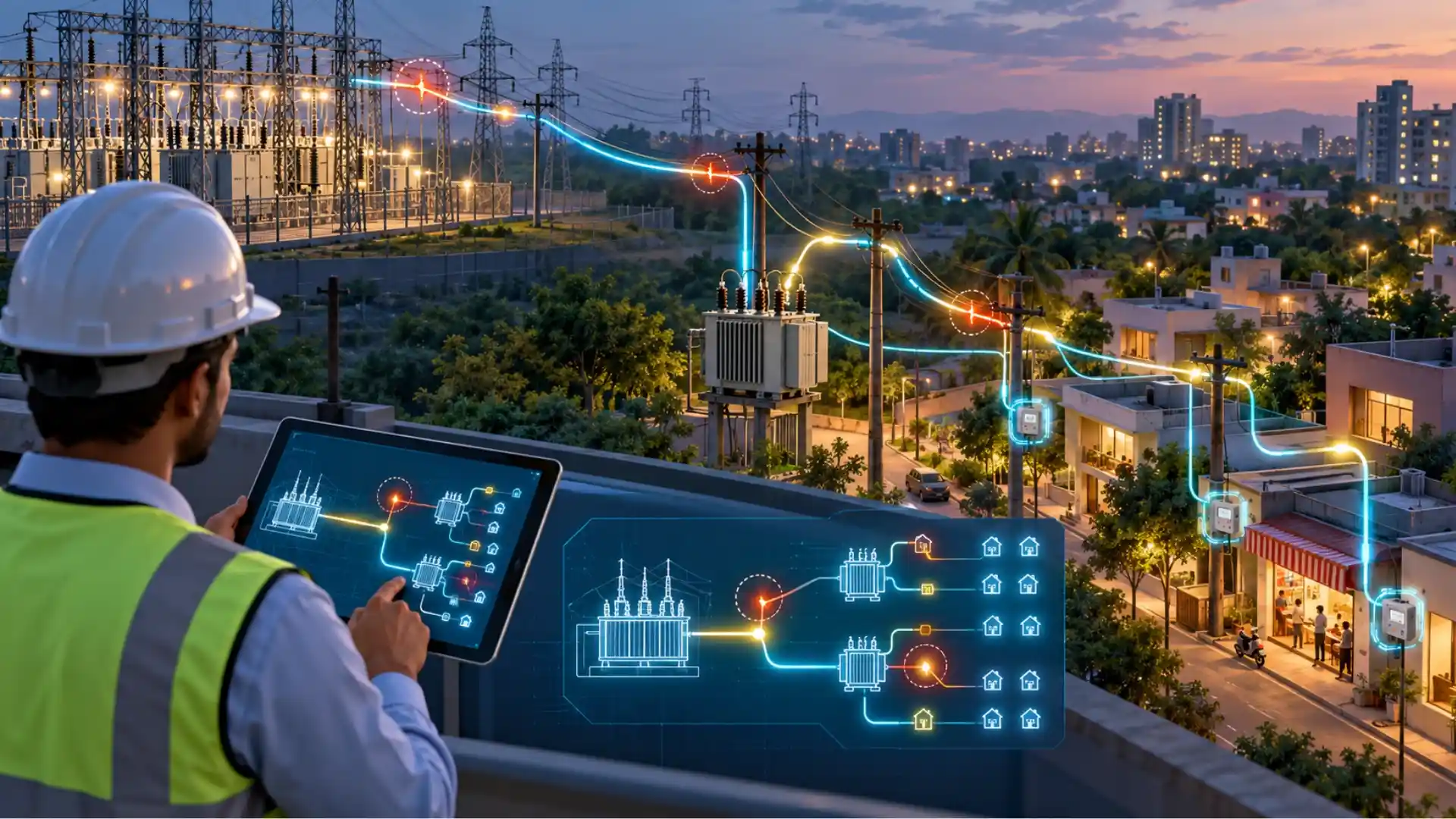
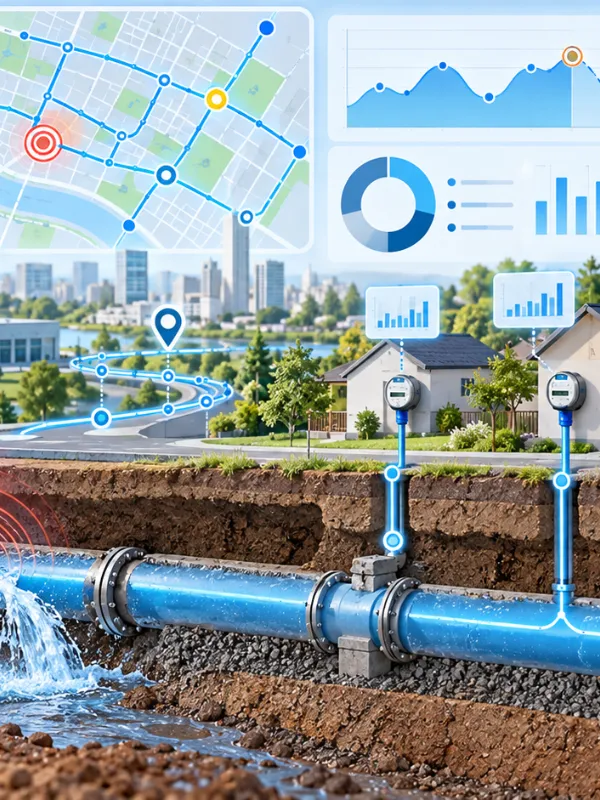
.jpg)
Why Is AI-OCR Meter Reading Critical for Modern Utilities?
In today’s utility environment, there is an increasing focus on how they will capture, validate, and operationalize meter readings. As AMI deployments continue to increase, the risk of errors associated with traditional meter readings also rises. Even today, there still exists a large segment of utility customers that continue to rely on manual and semi-digital methods for field meter readings.
Three trends are driving this increased urgency more than ever:
- Increased emphasis on billing accuracy and revenue protection.
- Bridging the gaps between partially deployed AMI Ecosystems.
- Accelerating the meter-to-cash process without increasing workforce.
Billing accuracy remains critical for financial performance since even the most minute mistakes can possibly scale into revenue loss or consumer disputes. Despite large-scale AMI adoption globally, many utilities still function in hybrid conditions. Some consumers are equipped with smart meters, while others may still require physical visits and manual validation to take readings and complete the billing process.
This results in a clear technology gap. Standard OCR tools focus majorly on digit extraction, without validating:
- Whether the meter reading is logically consistent
- Whether the correct meter was captured
- Whether the meter image aligns with the utility billing and audit workflows
Traditional OCR tools alone cannot single out patterns or signals in tampering, fraud, GPS inconsistencies or billing workflow constraints. These are issues that directly influence revenue recovery and compliance.
For modern smart grids, digit extraction alone would no longer suffice. Grid’s AI-powered OCR and computer vision is designed to fill the above gaps, bringing smart and auditable meter reading across every endpoint. This blog explores how AI-driven OCR must be workflow aware, fraud resistant and tightly integrated into the existing AMI-operations-billing ecosystem, and not as a standalone solution.
What are the Challenges with Traditional & Basic OCR Meter Reading?
Even with the existence of digital tools and basic OCR, utilities may not be able to overcome several operational and financial risks. Below we explore some common hurdles associated with traditional OCR meter reading methods.
Human Error & Image Quality Issues
Manual meter reading still relies on field conditions. Issues like poor lighting, dirt on the display, glare, and reader fatigue could lead to digit misreads and billing discrepancies.
Mismatched Meters and Wrong-Premise Reads
Without a system-level verification workflow, field teams may photograph or capture the wrong meter. This can be especially problematic in commercial complexes or multi-tenant buildings, resulting in increased manual work and billing disputes.
No Way to Detect Tampering or Fraud Using Simple OCR
Digit-only scanning approach cannot identify cracks, missing seals, overlay stickers, bypass wires, repeated images, or any visual indicators of fraud. In such instances, revenue protection teams lack critical information to protect against revenue loss or tampering/fraud events.
High Manual QA (Quality Assurance) Load Before Billing
Utilities often spend significant time in back-office QA; from validating readings, and resolving mismatches, to cleaning data. Each additional QA step adds additional delays to the billing process and increases the cost to the utility of processing its billing.
Data Mismatch Across AMI, Field Reads & Billing Systems
Hybrid metering ecosystems often create multiple sources of truth. Without any form of automated checks or centralized data warehouse, utilities struggle due to constant variance between AMI data, OCR field reads and utility billing systems.
Limited Audit Trail, Slow Dispute Resolution
Standard OCR solutions do not capture metadata such as GPS coordinates, timestamps, EXIF data, and device signatures. Therefore, when a billing dispute happens, utilities lack defensible evidence or data traceability.
How Does Grid’s OCR Meter Reading Work?
Unlike standard OCR tools that only extract digits, Grid’s AI-driven OCR is designed as a complete meter-reading workflow, right from field capture to audit-ready data. The solution combines AI-powered image processing, fraud detection, and utility workflows into one system. Here’s how it works for utility field operations.
Guided Meter Reading with System Awareness
Every job begins with Grid’s Frontline App, where field workers get access to synchronized AMI, asset, consumer and billing data from the platform’s unified data layer. Before any pictures of a meter are taken, the app confirms the following details:
- Correct consumer account and premises information
- Correct meter make, model, and serial number
- Correct billing parameters (kWh, kVAh, kW, MD, etc.)
This approach helps eliminate wrong meter readings by validating the job context at the source. Because the workflow is embedded in the app, job integrity is enforced consistently across routes and teams.
Image Capture with Built-In Pre-Checks
When the picture is taken by a meter reader, Grid automatically checks for:
- Display clarity
- Glare, hindering objects or shading issues
- Working segments in the LCD display
By performing these checks on an image before being taken, our OCR solution minimizes instances of receiving non-usable photos. Utilities can also reduce the amount of time spent by the bulk of a workforce on recreating photos and handling any corrections.
AI OCR with Multi Layer Validation
After capturing an image, Grid's OCR immediately performs a series of validations. The validation sequence falls into three categories:
I. Anti-Fraud Validations
These checks are intended to ensure that the image represents a real meter and not manipulated or staged in any way. Here, Grid’s role includes:
- Checking real meter versus printed/screen image
- Detecting patterns of tampering through elements such as broken seals, overlays, burnt marks and bypass wiring
- Preventing repeated use of past images via duplicate image detection
- Ensuring device integrity by matching EXIF data with app device meta data
- Conducting temporal and location checks to identify GPS radius, suspicious time stamps and route inconsistencies
These checks are purpose-designed to prevent revenue loss resulting from fraudulent readings or non-compliant behaviour, and are completed way before any readings are submitted for billing.
II. Anti-Error Validations
In this stage, every rule ensures that the readings are correct and logical.
- The meter follows the right parameter type (i.e. kWh, MD, TOD)
- The barcode/QR code/make/model matches the meter.
- Key logical value checks:
- No negative meter reading values are present
- No impossible level of consumption from one month to the next
- Detection possible meter rollbacks
Here, Grid also leverages multi-frame OCR verification, where numerous burst-mode frames are cross-checked for accuracy. An additional validation layer also checks for TOD (time-of-day) alignment and compares the values against historical patterns to prevent billing discrepancies.
III. Workflow & Operational Validations
Checks and validations in this stage ensure correct execution of field processes. The platform keeps track of:
- Route and geo-spatial path adherence
- Faulty display detection
- Zero-load anomalies
- Duplicate read prevention
- Job sequencing constraints
Once a reading passes the check, it is locked in permanently so that it cannot be overwritten or altered in future. This workflow creates a defensible audit trail supporting comprehensive billing process and compliance adherence.
Immediate Sync for Trusted, Bill-Ready Reading
After validation and checks, the readings automatically flow into Grid’s unified data model. The data is then sent to AMI downstream systems for use across billing, asset management and dashboarding.
Each reading is tagged with image metadata, timestamp, GPS coordinates, and validation status. Field supervisors get real-time visibility into:
- Daily read completion
- OCR error rates
- Fraud and tamper flags
- High-priority exceptions
This comprehensive cycle removes the need for manual QA cycles or spreadsheet-based validation. Utilities no longer have to worry about cleaning data after the fact, but ensure reliable readings at the point of capture.
What are the Benefits of Grid’s OCR for Utility Meter Reading?
Grid’s AI-driven OCR delivers quantifiable improvements across billing, field ops, revenue assurance, and utility workflows. Let’s explore some core benefits below.
Accurate Measurement & Revenue Assurance
With validation happening at the point of capture, utilities can now:
- Eliminate misreads and ambiguous manual inputs via validation at the point of capture.
- Detect tampering, rollback, and suspicious consumption events early on, way before it impacts billing.
- Protect revenue in high-value commercial and industrial segments, where even one inaccurate invoice can significantly affect monthly revenues
- Reduce disputes by ensuring every meter read is both accurate and audit-ready.
Faster, Lower-Cost Meter Reading Cycles
With Grid, utilities can shorten meter reading timelines and minimize operational cost per read.
- Field teams can now complete more reads in each cycle, with travel becoming the only limiting factor.
- Long events of manual entry and follow-up visits are reduced/eliminated by validating the reading automatically at the source.
- First-pass reading acceptance rates improve, which reduces back-office quality assurance time.
- Billing cycle completion timeframes shorten, along with the total cost of each read.
Transparent Audit Trails & Regulatory Readiness
Every reading is captured with its complete context, which enables auditors and regulators to verify whether readings are valid, supporting compliance.
- Every reading is recorded with the location, date, time, image of the reading, EXIF, and information from any validation process used to save the reading.
- Utilities gain auditable and traceable data to use in disputes with customers or regulatory requirements.
- Eliminates dependence on paper based, manual, or telephone communications for recording data.
- Decreases risk of violating regulatory requirements associated with unverifiable or incomplete data.
Centralized Data for Planning, Forecasting & AMI Reconciliation
All validated readings are linked to utility related data, enhancing analytics and utility network infrastructure planning.
- High quality readings are automatically fed into a Grid’s unified data repository.
- Improves accuracy in load forecasting, network studies, and billing.
- Supports AMI reconciliation by highlighting communication failures or meter equipment and maintenance issues.
- Prevents data inconsistencies across multiple metering environments by establishing a single source of truth.
Conclusion: How Does AI-OCR Elevate Metering to an Operational Advantage?
In order for utilities to modernize their meter to cash and field operations, the need for accurate, defensible and system integrated meter data becomes a necessity. One of the ways to achieve this is through the use of AI driven OCR. This capability enables utilities to treat every meter interaction as an opportunity to enhance visibility, efficiency, and grid intelligence.
Solutions like Grid demonstrate OCR delivers even greater value when integrated into field ops workflows. The platform validates readings against historical data and trends to ensure authenticity and detect potential anomalies. Moreover, the built-in fraud detection feature allows utility providers to move beyond basic digit extraction and deliver trusted measurable results.
If you’re exploring how AI-powered OCR can strengthen your existing metering processes or bridge gaps in hybrid AMI environments, our team at Grid’s can walk you through how the platform fits within your existing operational and data landscape. Connect with Grid to request a personalized demo and see how our AI-driven OCR can streamline workflows, enhance billing integrity, and support your broader smart-metering strategy.